What the Hell Is a European Mount, Anyway?
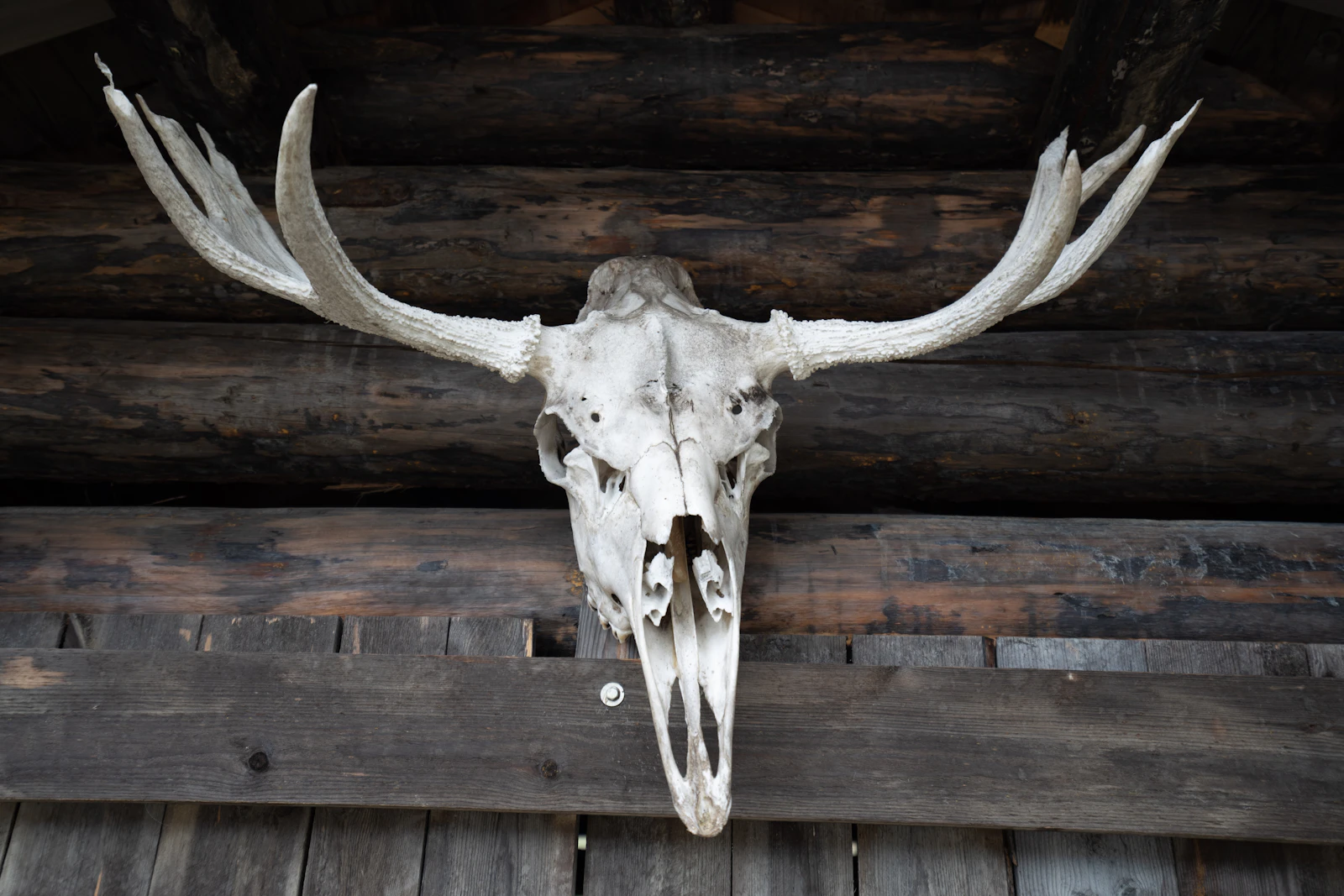
A European mount is a cleaned, bleached skull with antlers attached to a wooden plaque or pedestal base. That's it. No skin, no eyes, no pretense. You're looking at pure bone structure with the rack mounted proud in front. It's what you see when you walk into a serious hunter's office or a taxidermist's showroom, clean, elegant, and honest about what it is.
Unlike a shoulder mount (which shows the neck, shoulders, and head of the animal) or a pedestal mount (which stands on a base), a European mount strips everything back to the skull cap and antlers. You get the focal point without the bulk. It's been a centerpiece of hunting lodges and natural history collections since the 19th century, when European hunters started mounting their trophies this way. The name stuck.
Here's the real value: a quality European mount costs less than a shoulder mount, takes up half the wall space, and honestly? It looks better if your hunting room is anything like mine, packed with history and without a lot of square footage to throw around. For more details, see our cost comparison.
European Mount vs Shoulder Mount vs Pedestal Mount, Which One Actually Makes Sense?
Let's cut through the marketing. Each mount type serves a different purpose and hits a different price point.
- European Mount: Skull cap + antlers on a plaque or base. Cost: $150–$400 professional, $50–$100 DIY. Time: 3–6 hours professional, 2–4 weeks DIY (depends on your process). Wall space: minimal. Difficulty: moderate if DIY, easy if professional.
- Shoulder Mount: Head, neck, and upper body. Cost: $400–$1,500 professional. Time: 2–4 weeks professional. Wall space: significant. Difficulty: extremely difficult DIY, don't.
- Pedestal Mount: Skull and antlers on a wooden stand base, no wall mounting. Cost: $300–$800 professional. Time: 2–3 weeks. Space: tabletop or floor space. Difficulty: moderate DIY, easier than European if you're going traditional.
European mounts win if you want impact with minimal fuss. They're forgiving on space, straightforward to maintain, and they don't require you to commit to a wall-mounted installation. Plus, if you mess up the DIY process, you're out $50 in materials, not $400 in professional labor.
DIY European Mount: The Realistic Timeline and What You're Actually Getting Into
Let's be honest: DIY European mounting is not hard, but it's not quick either. There are three proven methods, maceration, simmering, and beetle cleaning. Each has trade-offs in time, smell, and final result.
Method 1: Maceration (The Patient Path)
Maceration means soaking the skull in water to let natural bacteria break down the soft tissue. This is the gentlest method and it works.
Process: Remove as much meat and tissue as possible by hand (yes, really). Place the skull in a container of dechlorinated water, use a dechlorinator from any aquarium supply, or let tap water sit in the sun for 24 hours to off-gas chlorine. Change the water every 2–3 days. After 10–14 days, the soft tissue should be loose enough to rinse away gently with a hose. The water will smell like death for 10 days, so keep it outside and far from your family.
Timeline: 2–3 weeks total.
Cost: Water, bucket, dechlorinator ($5–$10).
Reality: This method is stink-free by week 2 and produces excellent results. Your neighbors might question what you're doing, but the skull comes out pristine.
Method 2: Simmering (The Faster Approach)
Boiling is wrong. Simmering, low, gentle heat at 160°F, works without cooking the bone or damaging the antler base.
Process: Remove large tissue by hand. Place the skull in a large pot of water (not tap water, you'll regret the cleanup). Bring it to a gentle simmer, 160°F is your target, measured with a meat thermometer. Simmer for 2–4 hours, checking every 30 minutes. The brain should be loose and rinse out easily with a hose. Don't go above 160°F, and don't let it boil. You're not cooking dinner.
Timeline: 4–8 hours start to finish.
Cost: Propane, pot, thermometer ($20–$40).
Reality: This is faster, but your kitchen equipment will never be the same. Use a dedicated pot you don't care about. The smell is severe for 2–3 hours.
Method 3: Beetle Cleaning (The Hands-Off Option)
Dermestid beetles are nature's taxidermists. You ship your skull to a beetle cleaning service (roughly $75–$150), and they return it completely clean in 2–4 weeks. Services like Beetles to Bones handle this professionally. For more details, see our skull cleaning tips.
Timeline: 2–4 weeks (shipping included).
Cost: $75–$150 shipped.
Reality: This is the lazy person's method, and it works great. Your skull comes back cleaner than you could achieve yourself, with no smell, no mess, no learning curve. The trade-off is time and cost.
Degreasing, The Step Most People Skip and Regret
After maceration or simmering, your skull is clean but greasy. Bone absorbs oils from the animal's tissue, and if you skip degreasing, your plaque will smell like a rendering plant for months. Really. Don't skip this.
The Process: Soak the clean skull in a 50/50 mixture of white vinegar and water for 24 hours. Alternatively, use acetone (the active ingredient in some nail polish removers) for a faster 6-hour soak. After soaking, rinse thoroughly with water and let it air dry for 24–48 hours in the sun. The sun helps pull remaining grease to the surface where it can evaporate.
Cost: Vinegar or acetone ($5–$10).
Timeline: Add 24–48 hours to your total project.
Whitening Your Skull, Hydrogen Peroxide, NOT Bleach
This is critical: use hydrogen peroxide, not household bleach. Bleach damages bone, yellows it, and makes it brittle. I see this mistake constantly, and it ruins good work.
The Right Way: Mix hydrogen peroxide (12% strength, available from beauty supply stores or online) with water at a 1:3 ratio (1 part peroxide to 3 parts water). Soak the skull for 8–12 hours. If you want more aggressive whitening, increase to 1:2 ratio, but don't go full-strength peroxide on fresh bone, it can over-bleach and make the skull brittle.
Cost: 12% hydrogen peroxide ($8–$15 per bottle).
Timeline: 8–12 hours soak time.
Reality: Your skull will be brilliant white. If you've degreased properly, this whitening will last for years without yellowing. A common mistake: soaking too long or using bleach. Both ruin the result.
Plaque Selection, Where Your Skull Actually Lives
Your skull is clean and white. Now you need something to mount it on. This is where the real cost and aesthetic choices come in.
Wood Plaques (The Classic Choice)
Walnut, oak, and maple are standard. Wood plaques cost $30–$80 from specialty suppliers.
- Walnut: Dark, elegant, shows dust. Classic choice. $40–$70.
- Oak: Light grain, durable, traditional. $30–$50.
- Maple: Fine grain, modern look, lighter weight. $35–$60.
Sourcing: Specialty taxidermy suppliers like Ohio Taxidermy Supply and generic woodworking suppliers both work. Custom plaques run $60–$120 if you want your name or a date engraved.
Skull Hooker Plaques (The Modern Alternative)
Skull Hooker makes polymer-composite plaques that are lighter, more weather-resistant, and more affordable than wood. The Big Hooker ($45) and Little Hooker ($35) are popular choices for DIY mounting. For more details, see our Skull Hooker review. For more details, see our skull plaques buyers guide. For more details, see our european mount buyers guide.
Pros: Lightweight, won't warp, weather-resistant, easy to install.
Cons: Less traditional aesthetic, more visible mounting hardware. For more details, see our mounting hardware guide.
Custom Plaques
If you want something bespoke, your name, date, location, budget $80–$150 for a custom walnut or oak plaque from a local woodworker or online supplier.
Mounting Your Skull to the Plaque, The Mechanical Reality
Once your skull is clean, white, and degreased, mounting is straightforward. You have two main options: mechanical mounting or adhesive mounting.
Mechanical Mounting (Skull Hooker Method)
Skull Hooker systems use a threaded bracket that screws into the skull cap base and bolts to a plaque. Installation takes 15 minutes.
Process: Measure the attachment points on your skull cap. Drill pilot holes. Install the Skull Hooker brackets (comes with bolts and hardware). Mount the plaque. Done.
Cost: Skull Hooker bracket ($25–$45) + plaque ($35–$80) = $60–$125 total.
Pros: Reversible if you change your mind. Rock-solid mounting. Fast.
Cons: Visible hardware. Requires drilling into the skull.
Adhesive Mounting (The Classic Method)
Use heavy-duty construction adhesive (like Liquid Nails for Projects) or museum-quality epoxy. Some traditionalists still prefer a combination: mechanical bolts for security, adhesive for aesthetics.
Process: Clean the skull cap base with a wire brush. Apply adhesive generously to both the skull and plaque. Press firmly and clamp or weight it for 24 hours.
Cost: Adhesive ($5–$10).
Pros: No visible hardware. Traditional appearance. Low cost.
Cons: Permanent. Takes 24 hours to set. Requires a clamp or weight setup.
Full Cost Breakdown: DIY vs Professional
DIY European Mount (Start to Finish):
- Skull prep (maceration or simmering): $5–$20, see our skull preparation guide.
- Degreasing materials: $5–$10
- Hydrogen peroxide whitening: $8–$15
- Plaque: $30–$80
- Mounting hardware or adhesive: $5–$45
- Total: $53–$170
Professional European Mount: $150–$400 depending on skull size and plaque quality.
The savings are real, but your time is worth something. If you're charging yourself $50/hour, a 20-hour DIY project ($50 in materials + $1,000 in your labor) doesn't make financial sense. It makes sense if you enjoy the process or want to learn.
Common Mistakes That Ruin the Result
- Using bleach instead of hydrogen peroxide: Damages the bone. Don't do it.
- Boiling instead of simmering: Cooks the bone and damages the base where antlers attach. Simmer at 160°F.
- Skipping degreasing: Your mount will smell for months.
- Not removing brain tissue completely: Leaves rot smell. Remove everything you can see.
- Whitening too long: Bone becomes brittle. 8–12 hours in diluted peroxide is plenty.
- Mounting without letting it cure: Adhesive needs 24 hours. Mechanical mounting is faster, but give it a day anyway.
When to Call a Professional Instead
Professional mounting makes sense if your skull is rare, high-value, or damaged. If you shot a record-book buck or inherited a historical mount, don't experiment. A professional taxidermist charges $150–$400 and guarantees results. Your time learning could cost more than outsourcing.
Also, beetle cleaning ($75–$150) is worth it if you hate mess and smell. I know hunters who do this exclusively, ship the skull to Beetles to Bones, get it back pristine, DIY the mounting and plaque selection.
Where to Source Your Supplies
Plaques and Mounting Hardware:
- Skull Hooker: Big Hooker ($45), Little Hooker ($35), Mini Hooker ($25). Available direct. We earn commissions on qualifying purchases through our links.
- Ohio Taxidermy Supply: Wood plaques, Matuska forms, degreasing agents. Solid supplier for DIYers.
- Van Dyke's Taxidermy Supply: Wood plaques, mounting hardware, chemicals. Since 1949. Fair shipping, fair prices.
- McKenzie Taxidermy: Forms, plaques, eyes, chemicals. Broad selection, decent pricing.
Beetle Cleaning Services:
- Beetles to Bones: $75–$150, 2–4 weeks turnaround. Excellent results. We earn commissions on qualifying purchases through our links.
Hydrogen Peroxide: Beauty supply stores carry 12% strength. Or order online from Amazon or Sally Beauty Supply. Don't use household 3% peroxide, it's too weak and you'll need a gallon of it.
Final Take
A European mount is the smart choice if you want a clean, affordable, impressive display for a quality deer or elk skull. DIY is achievable if you have patience and attention to detail, follow the temperatures, skip the bleach, don't rush the degreasing. Professional mounting takes the guesswork out and guarantees a result. For more details, see our european deer skull mount guide.
Either way, you end up with something that looks like you know what you're doing. And in a hunting room, that matters.
Sources & References
- McKenzie Taxidermy Supply, Manufacturer specifications and product testing
- Van Dyke's Taxidermy, Professional-grade supply standards
- National Taxidermists Association (NTA), Equipment and material recommendations
Frequently Asked Questions
What's the most important tool for a beginning taxidermist?
A quality scalpel and cutting tools come first. Precision cutting determines mounting success. Invest in German-made tools, they hold edges better than cheap alternatives.
Are professional-grade supplies worth the extra cost?
Yes. Professional supplies produce better results with less frustration. Cheap tools dull quickly, require constant sharpening, and limit detail work. Premium supplies pay for themselves in efficiency and quality.
Can I substitute cheaper materials and get acceptable results?
Some corners can be cut; others can't. Eyes and noses matter, invest there. Filler materials, adhesives, and tools are where you can find value without sacrificing quality.