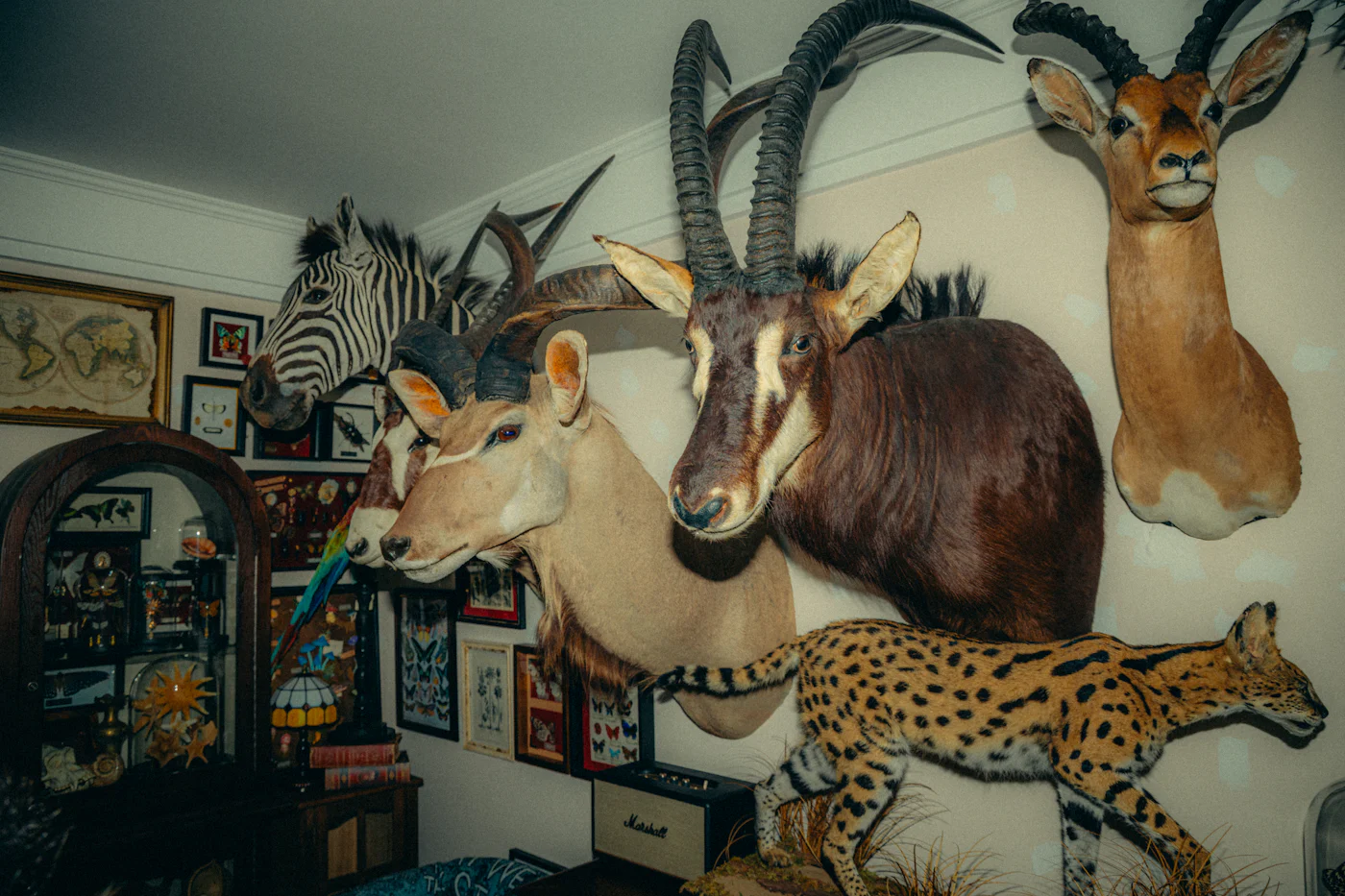
What's the difference between all these mount types, and which one is right for you?
If you've been shopping for taxidermy or looking at options for a specimen, you've probably heard terms like "shoulder mount," "European," "full-body," and "pedestal." But what do these actually mean, and more importantly, which makes sense for your animal, budget, space, and vision? This guide breaks down every mount type with cost ranges, pros, cons, and real-world use cases so you can make an informed decision.
Mount Types at a Glance
| Mount Type | Species | Display Space Needed | Cost Range | Best For | Typical Lifespan |
|---|---|---|---|---|---|
| Shoulder | Deer, elk, antelope, large game | 12–18" projection | $600–$1,200 | Most common; classic trophy look | 30–50 years |
| European (Skull) | Deer, elk, antelope | 6–10" projection | $400–$800 | Minimal space; skull focus | 30–50 years |
| Full-Body | Small game, foxes, coyotes, raccoons | 18–36" projection | $800–$2,000 | Complete animal display | 30–50 years |
| Pedestal | All sizes (custom bases) | 360° floor space (2–3') | $1,500–$4,000 | Premium display; museum quality | 30–50+ years |
| Fish Replica | All fish | Wall or stand (varies) | $500–$2,000 | Mounted fish display | 20–40 years |
| Bird (Standing) | Game birds, raptors, songbirds | Pedestal or branch | $400–$1,000 | Bird hunters; educational | 20–35 years |
| Bird (Flying) | Game birds, raptors | 24–36" projection | $600–$1,500 | Dynamic presentation | 20–35 years |
| Rug/Hide | Large predators (bear, mountain lion) | Floor (6–12' display) | $1,500–$4,000+ | Dramatic floor display | 30–50 years |
Shoulder Mount: The Most Popular Option
A shoulder mount displays the head, neck, and front shoulders of an animal, typically wall-mounted. This is by far the most common mount type for game animals.
What You're Getting
- Head and neck in lifelike position
- Shoulder and chest anatomy sculpted to form
- Wall bracket or pedestal base
- Minimal storage space required
- Customizable head turn and ear positions
Cost Breakdown
Standard whitetail deer: $600–$900. Mule deer (larger): $700–$1,100. Elk: $1,200–$1,800. Antelope/smaller game: $400–$600.
Variables affecting price: Antler size/quality (larger = more detail work). Hide condition (damage or mange increases repair work). Pose customization (alert vs. relaxed positioning). Artistry level (basic vs. museum-quality detail).
Pros
- Displays the animal's face and expression (most important anatomical focal point)
- Fits on most walls; 12–18" projection fits standard home layouts
- Price is accessible for most budgets ($600–$900 range for quality)
- Preserves trophy aspect for hunters
- Customizable head angles for display flexibility
Cons
- Body language limited to neck position
- Large wall space required (3–4 feet wide for big game)
- Anatomically less complete than full-body mounts
- Difficult to display multiple mounts in one room without careful arrangement
Best For
Hunters preserving trophy deer, antelope, or elk. Collectors with wall space. Those prioritizing face detail and expression. Anyone wanting the classic hunting lodge look.
European Mount: The Skull-Focused Approach
A European mount displays the cleaned skull, antlers, and minimal surrounding tissue, often mounted on a decorative plaque or base. This style originated in Europe and emphasizes antler structure over soft tissue.
What You're Getting
- Cleaned, often whitened skull
- Antlers or horns attached to skull
- Decorative plaque (wood, stone, or custom)
- Sometimes minimal nose/ear sculpting, but primarily bone-focused
- Minimal "soft tissue" material; mostly skeletal display
Cost Breakdown
Whitetail deer: $400–$700. Mule deer: $500–$800. Elk: $800–$1,200. Small antelope: $300–$500.
Pros
- Lowest cost among major mount types
- Minimal wall projection (6–10"); fits tight spaces
- Emphasizes antler/horn structure and size
- Antiquarian or naturalist aesthetic; trendy in modern interiors
- Easy to move or relocate
Cons
- Less lifelike than shoulder or full-body mounts
- Doesn't showcase animal's face or expression
- Skull cleaning and whitening critical (poor preparation = poor results)
- Limited artistic presentation; primarily skeletal display
Best For
Collectors valuing antler size and structure. Space-limited displays or small apartments. Those preferring minimalist or modern aesthetics. Hunters with impressive sheds wanting quick, affordable mounting.
Full-Body Mount: The Complete Picture
A full-body mount displays the entire animal in a lifelike pose, often walking or standing alert. This is the most technically demanding mount type and showcases the complete animal anatomy.
What You're Getting
- Entire body: head, body, legs, tail
- Lifelike anatomical positioning
- Detailed eye, nose, ear, and paw work
- Pedestal or wall-mounted base
- Typically 18–36" floor projection depending on animal size
Cost Breakdown
Fox: $1,000–$1,500. Coyote: $1,200–$1,800. Raccoon: $800–$1,200. Bobcat: $1,500–$2,200. Black bear: $3,000–$5,000+.
Pros
- Shows complete animal anatomy and body position
- Most lifelike and dynamic presentation
- Excellent for small game or predators
- Creates strong focal point in any room
- Tells a complete story about the animal
Cons
- Highest cost among most options (after large predator rugs)
- Requires significant floor space (2–4 feet x 1–2 feet base)
- More complex sculpture work = higher taxidermist skill required
- Hide handling demands are greater; damage more visible
Best For
Collectors wanting dramatic centerpiece. Hunters preserving coyotes or predators. Those with dedicated display rooms or hunting lodges. Clients seeking storytelling mounts that convey behavior and movement.
Pedestal Mount: The Premium Option
A pedestal mount places the animal (head-only or full-body) on a sculptured or natural-wood base, creating a 360-degree viewing experience. This is the museum-quality standard for serious collectors. See our pedestal mounts guide for costs, animal fit, and display planning.
What You're Getting
- Head-only or full-body mount (depending on configuration)
- Custom-crafted wood or stone base (often with artist-created elements: rocks, vegetation, custom plaques)
- Completely viewable from all angles
- Professional installation required (base can weigh 50–300 lbs depending on size)
Cost Breakdown
Small pedestal (fox-sized): $2,000–$3,000. Medium pedestal (coyote-sized): $3,000–$4,500. Large pedestal (bear-sized): $5,000–$10,000+. Custom base with natural elements: Add $500–$2,000+.
Cost factors: Animal size. Wood quality and finish (oak, walnut, cherry, distressed finishes all affect price). Custom base artistry (museum-quality bases command premium). Engraved plaques with details.
Pros
- Museum-quality presentation
- Completely viewable from all angles
- Custom bases add unique artistry and personalization
- Impressive centerpiece for any collection
- Professional appearance suits formal display areas
Cons
- Highest cost option (often $3,000–$10,000)
- Requires substantial floor space (2–3 feet x 2–3 feet minimum)
- Heavy installation; permanent placement (difficult to move)
- Base design becomes part of the aesthetic (mismatched base ruins the effect)
Best For
Serious collectors and museums. Premium investment pieces meant to last. Those with display rooms or dedicated hunting lodges. Clients who want installation as a professional centerpiece, not just a wall decoration.
Fish Mounts: Replicas vs. Traditional Skin
Fiberglass Replica Mount (Most Common)
What it is: A fiberglass form cast to match the original fish's shape, individually painted to replica specifications. Cost: $500–$1,500 depending on fish size and detail level.
Pros: Doesn't require original specimen (cast can be made from photos or dimensions). More durable than traditional fish skin mounts. Paint can be touched up easily. Realistic and display-ready quickly.
Cons: Doesn't preserve the actual catch (only a replica). Quality varies based on base form and painting skill. Custom forms require additional cost.
Traditional Fish Skin Mount
What it is: The actual fish's body and skin, mounted on an internal form. Cost: $600–$2,000 (requires skilled technique).
Pros: Preserves actual specimen. Authentic scales and natural coloration. Higher personal significance for meaningful catches.
Cons: Requires excellent hide preservation or hide deteriorates. Fading over time (UV exposure degrades color). Requires humid environment (45–55% ideal). More fragile than replicas.
Recommendation: Most fish mounts today use replica forms due to durability and consistency. Choose traditional only if the original catch is emotionally significant and you'll provide proper display environment (humidity and light control).
Bird Mounts: Standing vs. Flying
Standing Bird Mount
Presentation: Bird standing alert on a small base or branch. Cost: $400–$800. Best for: Game birds (pheasant, quail), raptors (hawk, owl), songbirds.
Pros: Natural, recognizable pose. Minimal space required. Fits shelf or pedestal display.
Cons: Less dynamic than flying pose. Requires less skilled anatomical positioning, which can show in quality variance.
Flying Bird Mount
Presentation: Bird captured mid-flight, wings extended, typically on a branch or custom base. Cost: $600–$1,500. Best for: Dramatic display, trophy game birds, educational specimens.
Pros: Dynamic and visually striking. Shows wing detail and extension. Tells a narrative of the bird in its natural behavior. More memorable display.
Cons: More technically demanding (higher cost). Requires skilled wing positioning and balance. Wings can be fragile in high-traffic areas.
Rug/Hide Mount: The Statement Piece
A rug or hide mount displays the entire animal skin and fur in a prone position, typically floor-mounted. This is reserved for large predators.
What You're Getting
- Complete hide and fur
- Head sculpted with glass eyes and nose detail
- Paws and claws preserved
- Felt or leather backing for floor protection
- Dramatic focal point for large spaces
Cost Breakdown
Black bear: $1,500–$3,000. Mountain lion: $2,000–$4,000. Grizzly bear: $3,000–$5,000+. Large predator rugs: Can exceed $5,000 depending on hide quality and artistry.
Pros
- Dramatic, statement-making display
- Shows complete hide and fur texture
- Impressive in hunting lodges and large homes
- Unique and memorable
Cons
- Highest cost for most hunters ($3,000–$5,000+)
- Requires 6–12 feet of floor space
- Hide is fragile; foot traffic damages fur
- Requires climate control (humidity, temperature, light)
Best For
Trophy hunters preserving major predator kills. Large hunting lodges and formal display areas. Clients with serious investment budgets and appropriate display environment.
How to Choose: Decision Framework
Question 1: How Much Space Do You Have?
Limited (6–10" projection or less): European mount or wall pedestal. Moderate (12–18" projection): Shoulder mount. Generous (18–36" projection): Full-body mount or floor pedestal. Large floor space (360° view): Pedestal or rug mount.
Question 2: What's Your Budget?
Under $800: European mount or smaller shoulder mount. $800–$1,500: Quality shoulder mount or basic full-body. $1,500–$3,000: Full-body or floor pedestal. $3,000+: Premium pedestal, large full-body, or rug mount.
Question 3: What's Your Priority?
Face/expression: Shoulder mount or full-body. Antler display: European mount or shoulder mount. Complete animal: Full-body or pedestal. Space-saving: European mount. Drama/impression: Pedestal or rug mount.
Question 4: What Kind of Animal?
Large game (deer, elk): Shoulder mount (most common). Small game (squirrels, rabbits): Full-body or pedestal. Predators (coyote, fox): Full-body or pedestal. Large predators (bear): Full-body, pedestal, or rug mount. Fish: Replica or traditional mount. Birds: Standing or flying mount.
FAQ: Taxidermy Mounts
What's the most common mount type? Shoulder mount, by far. Approximately 85–90% of mounted game are shoulder mounts. They offer the best balance of space, cost, and visual impact.
Which mount lasts the longest? All quality mounts last 30–50 years or longer with proper care. Environment (temperature, humidity, light) matters more than mount type. Protect from direct sunlight and maintain 40–55% humidity.
Can I display multiple mounts in one room? Yes, but coordinate them intentionally. Mix shoulder mounts with pedestals or European mounts for visual rhythm. Avoid three identical shoulder mounts all facing forward, arrange them at different heights and angles.
Is a pedestal or shoulder mount better? It depends on your space and goals. Shoulder mounts are more affordable and fit standard walls. Pedestals offer museum-quality presentation and 360-degree viewing but require floor space and higher budget. Neither is objectively "better", choose based on your situation.
Can I change the mount type later? Only if the original work allows it. If a shoulder mount is created, converting it to a pedestal mount is difficult. Choose your mount type before commissioning the work.
Know the law before you possess a bird, exotic, or protected specimen.
Some of the mount types above (bird mounts, large-predator rugs, life-size exotics) cover species that are legally sensitive.
- Migratory Bird Treaty Act (MBTA): most native songbirds, raptors, and waterfowl (and their feathers, nests, and eggs) are federally protected. Possession without a permit is a crime.
- CITES and endangered species: big cats (including mountain lion in some states), sea turtles, many parrots, elephant ivory, and some bear species are restricted for international and often domestic movement.
- State wildlife regulations: vary dramatically. Mountain lion possession, bear tag requirements, and out-of-season trophy movement are all state-specific. Check your state's Department of Natural Resources.
- Commercial practice: selling taxidermy work typically requires a state taxidermy license and federal permits for protected species.